CRAFT · 经验技艺
Make, observe, refine
Knowledge lived in people, materials and physical prototypes.
Industrial AI · Agent-native simulation · Generative engineering
At a pivotal junction in engineering history, MZ Lab is building the industrial AI, agent-native simulation and generative design systems that will transform how products are imagined, verified and realized.
A PIVOTAL JUNCTION
The change now underway may prove as consequential as the arrival of calculus or the computer. Engineering has advanced through successive ways of knowing and creating: craft experience, mathematical abstraction, computational simulation—and now intelligence that can reason, generate and act with us.
CRAFT · 经验技艺
Knowledge lived in people, materials and physical prototypes.
MATHEMATICS · 数学建模
Calculus and analytical models made engineering laws explicit.
SIMULATION · 数值仿真
Digital experiments let us test complex systems before committing matter.
INTELLIGENCE · 智能共创
Physics-grounded AI and agents become active collaborators across the lifecycle.
From verifying human ideas to co-creating designs from first principles
OUR MISSION
We are building the scientific foundations, agent-native simulation software, industrial AI systems and generative design methods that move engineering beyond ‘draw first, test later.’ The engineer becomes an active creator—setting intent, encoding values and constraints, and working with algorithms to discover solutions that neither could reach alone.
We do not see AI as an assistant added to engineering. We see it as a new engineering medium.
THE ENGINEERING LOOP
The laboratory is organized around one continuous exchange: engineering knowledge defines intent; agents assemble and operate trusted tools; simulation exposes physical truth; generative design creates alternatives; manufacturing returns evidence. Each cycle improves the next.
Requirements, standards, product knowledge and engineering intent become structured context.
Output: a trusted problem definitionAgent-native workflows assemble models, solvers, data and verification into reproducible evidence.
Output: physical evidenceOptimization explores topology, geometry, materials, systems and uncertainty—not just one shape.
Output: design candidatesDFM, costing, tooling, production and quality close the loop with measured outcomes.
Output: delivery and new evidenceTHREE PRIORITIES · ONE SYSTEM
The priorities are not separate departments. Industrial AI leads; agent-native simulation provides the dependable computational substrate; generative design turns both into new products.
LEAD FOCUS
We build AI systems that reason with engineering knowledge, operate validated software, preserve evidence, and support accountable decisions across product development.
COMPUTATIONAL FOUNDATION
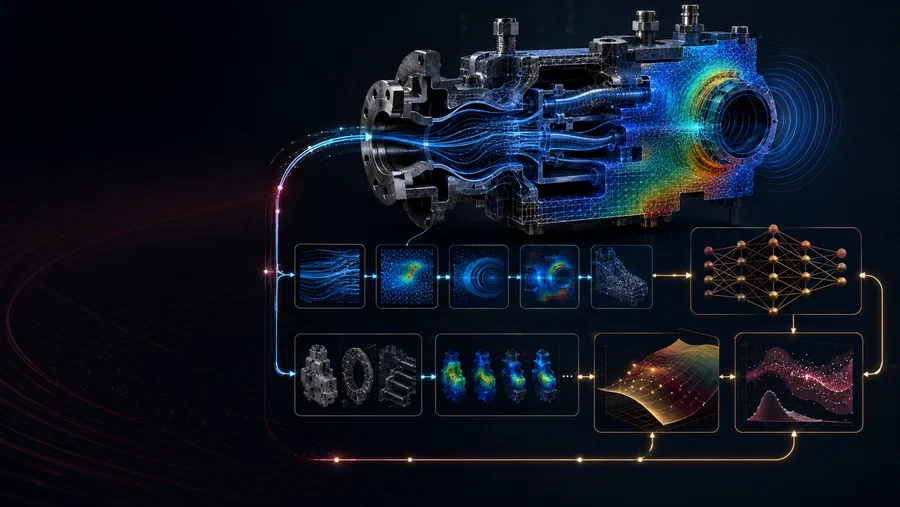
Instead of wrapping yesterday’s interfaces with a chatbot, we rethink simulation architecture for tool discovery, structured intent, composable solvers, automatic verification and transparent provenance.
CREATIVE ENGINE
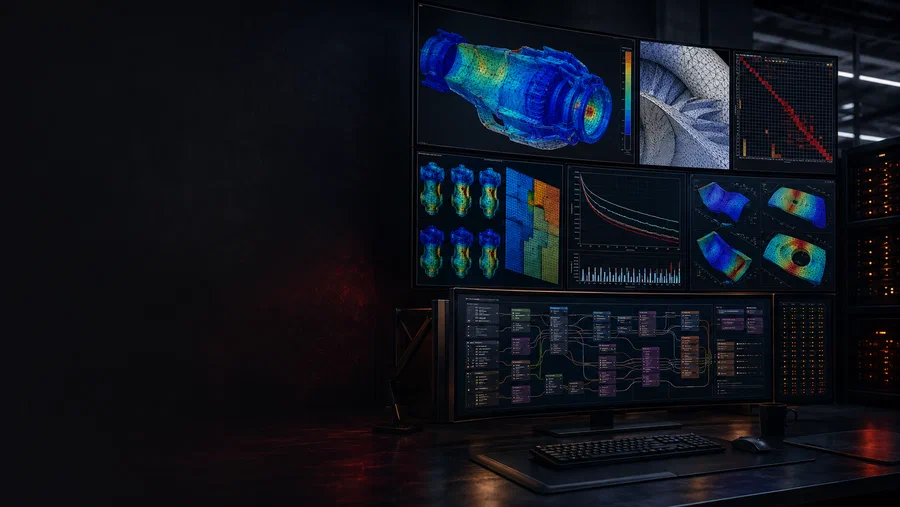
We connect concept generation to verified, manufacturable finalization through topology, shape, sizing and multidisciplinary optimization—under real physics, uncertainty and process constraints.
PROGRESS & ROADMAP
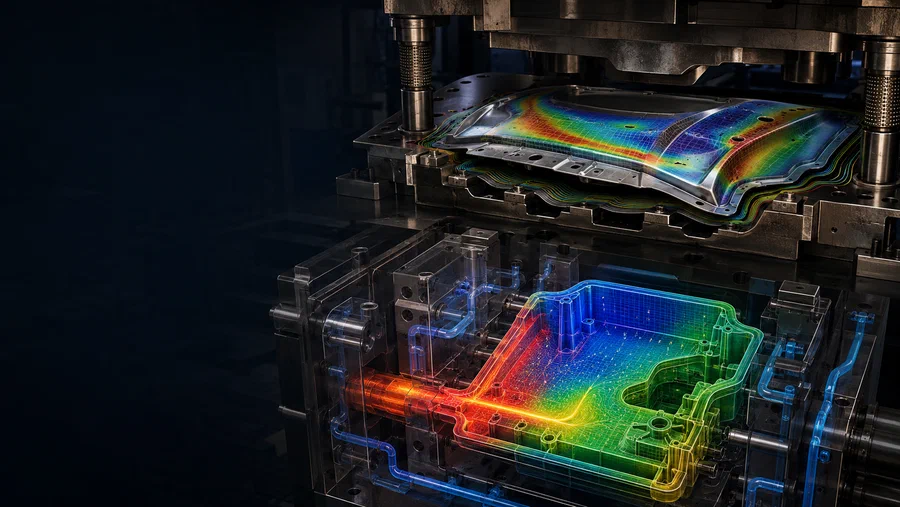
Injection-mold engineering is our first industrial proving ground. The platform is now in place; current work focuses on controlled mold-flow execution and result interpretation, followed by drawing generation, 3D mold design and DFM—then extension upstream into product design and development.
FOUNDATION ONLINE
A shared agentic foundation coordinates engineering context, specialist tools, workflow state, evidence and human review.
ENGINEERING AGENTS
Progress is staged by engineering evidence—not by feature count.
The first end-to-end engineering loop turns a simulation tool into a controlled, inspectable workflow.
NEXT
Engineering drawing generation and standards-based processing.
NEXT
Design capability developed progressively around representative mold structures.
NEXT
Product-geometry analysis and systematic manufacturability checks.
Current state · Foundation complete; mold-flow workflow under active development; design and DFM capabilities staged next.
INDUSTRIAL AI ROADMAP
Replicate proven methods, compound real engineering experience and train an industrial LLM grounded in manufacturing—not a generic model looking in from the outside.
STARTING POINT
Build repeatable agent workflows around a tightly connected engineering domain, then validate them against real projects and expert review.
REPLICATE & EXPAND
Transfer the working pattern into adjacent processes while preserving each domain's physics, tools and decision logic.
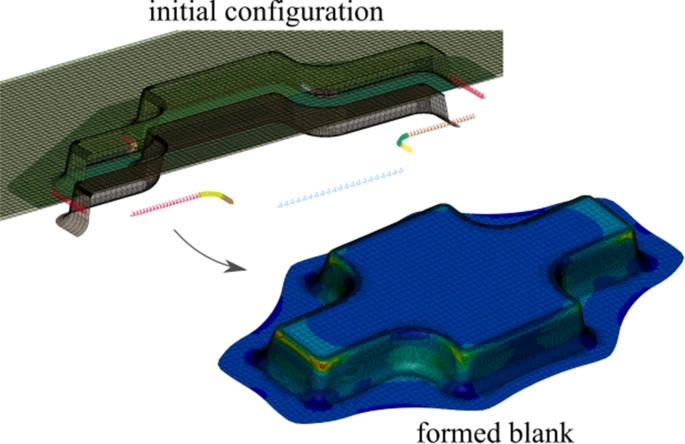
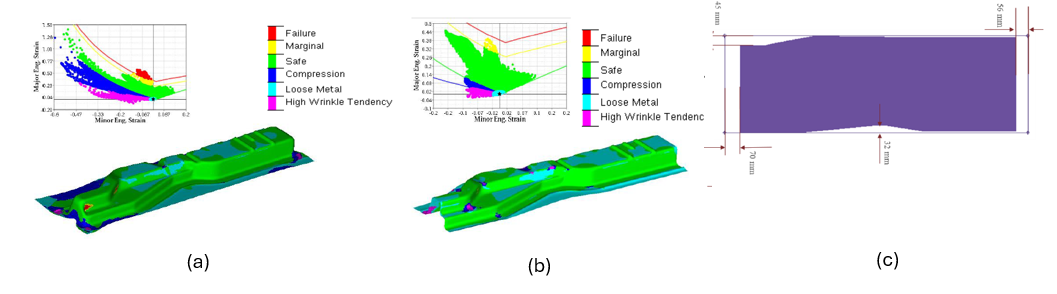
STAMPING
CASTING
Then onward to more manufacturing domains.
COMPOUND INTELLIGENCE
Every workflow becomes a learning surface: engineering sources enter with provenance, expert actions become reusable trajectories, and validated outcomes strengthen the next decision.
ENGINEERING SOURCES
COMPOUNDED ASSETS
LEARNED TRAJECTORIES
AGENT-NATIVE BY DESIGN
Trust comes from architecture: agents must know what tools can do, how evidence was created, when a result is invalid, and where a human must decide.
DECISION LAYER
Role-specific reasoning, shared project memory, human gates and enterprise coordination.
ORCHESTRATION LAYER
Structured intent, tool routing, workflow state, model/data lineage and automatic verification.
PHYSICS LAYER
Modern C++ parallel architecture, solver interoperability, Python/Julia access, sensitivities and optimization.
ENGINEERING INTENT
THE INTERFACE CHANGES
An engineer should be able to ask for an outcome in domain language, inspect the assumptions, open the generated model, challenge the result and reproduce the complete path. That requires deeper software change than a chat overlay.
CONCEPT → MANUFACTURABLE FINALIZATION
The research challenge is to carry a promising concept through all the difficult transitions: topology to geometry, idealized physics to real loads, continuous material to discrete parts, performance to robustness, and analysis to manufacturing.
Topology, architecture, material and system alternatives.
Multiphysics, uncertainty, failure, robustness and sensitivity.
Geometry reconstruction, process constraints, tooling and production.
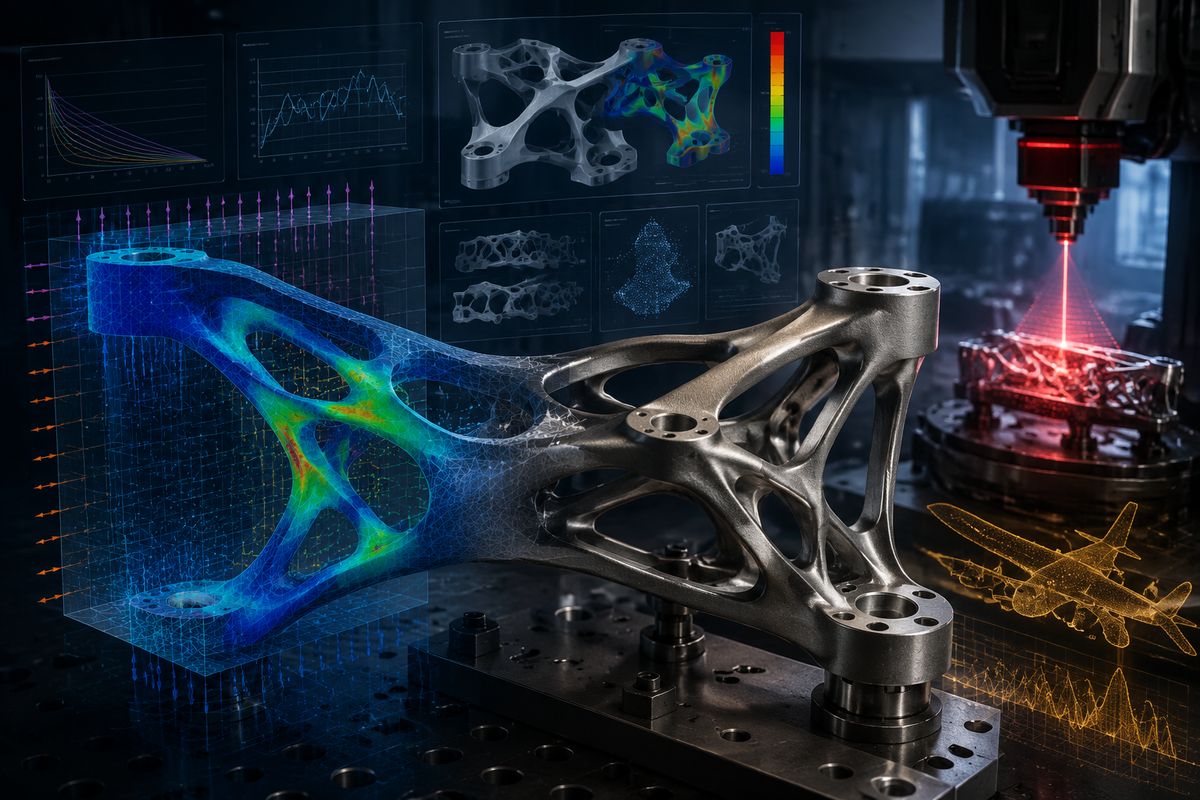
“Additive manufacturing frees us from constraints, unleashing and inspiring engineers’ creativity.”
ENGINEERING EVIDENCE
The laboratory’s direction is grounded in a long record of methods translated into aircraft structures, production software and experimentally tested manufacturing workflows.
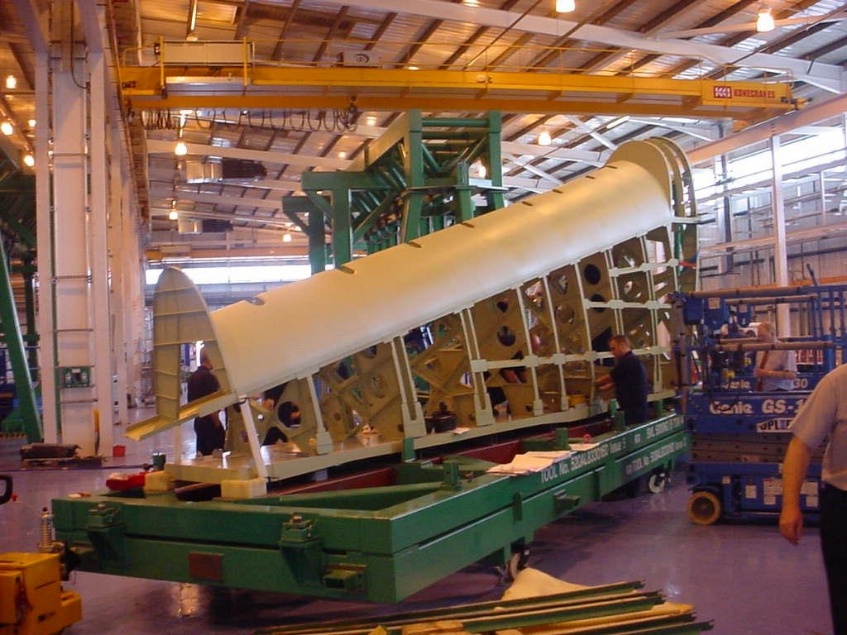
AIRCRAFT STRUCTURES · AIRBUS A380
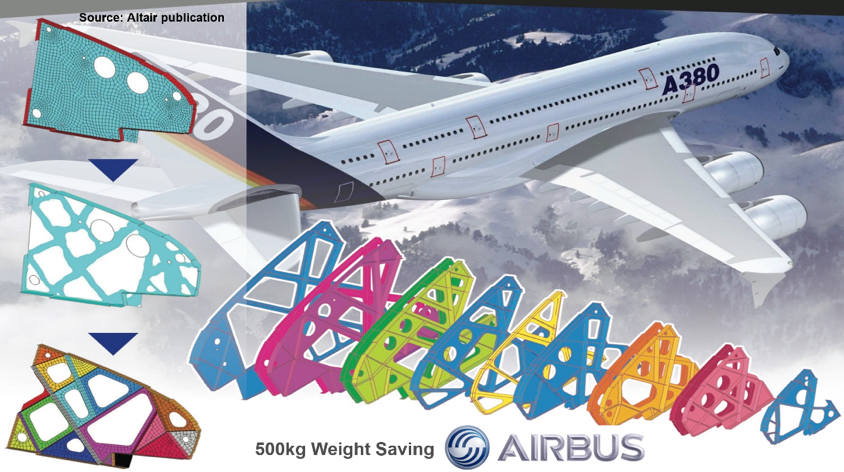
A widely cited Altair–Airbus application used topology optimization to redesign a family of A380 leading-edge ribs. The historical case reports a 500 kg aircraft weight saving and shows what simulation-driven generative design means in practice: one method, repeated across a real structural system, carried into an aerospace program.
FROM OPTIMIZATION TO PRODUCTION
Aircraft-scale impact requires more than an elegant optimum: model credibility, design reconstruction, certification constraints, software reliability and production integration all have to work together.
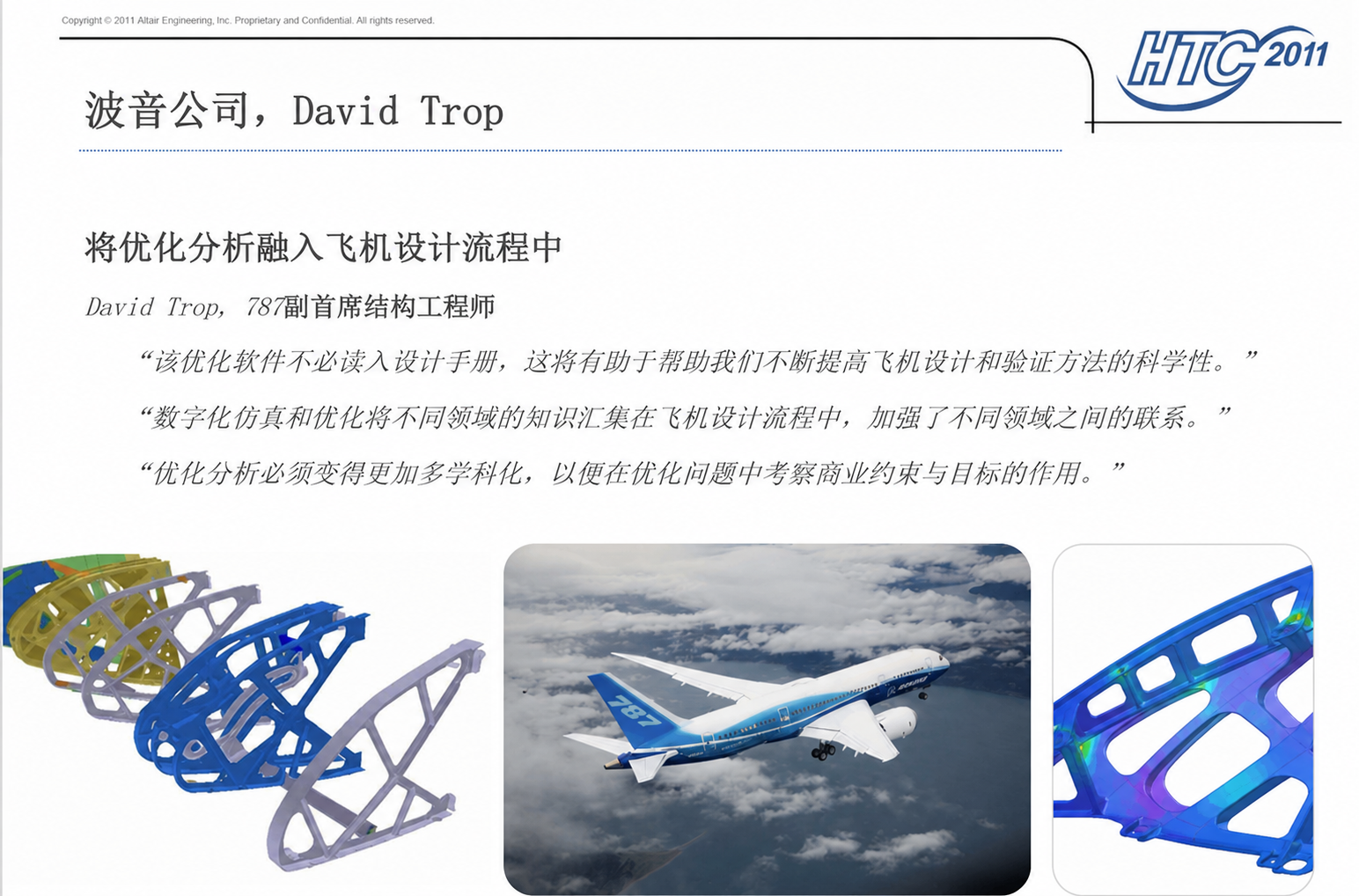
BOEING 787 · OPTIMIZATION CENTER
At Boeing’s 787 Optimization Center, optimization was embedded into the aircraft design workflow rather than treated as a late specialist study. Structural analysis, mathematical search and multidisciplinary program constraints were brought together to explore the design space systematically—an early proof of the simulation-driven engineering model the lab is extending today.
Historical case material: Boeing / Altair presentation.A CONTINUOUS LINE OF WORK
The COC algorithm connected topological, geometrical and generalized shape optimization.
Minimum-member control and the integration of topology, sizing and shape made optimization more practical.
Leadership across OptiStruct, HyperStudy, Radioss and the wider simulation–digital-twin–AI ecosystem.
A new platform joins domain knowledge, agentic workflows, simulation, optimization and enterprise delivery.

PEOPLE & OPPORTUNITIES
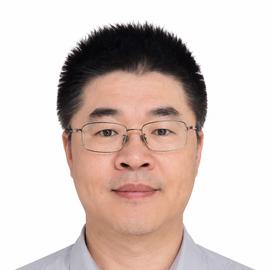
MZ Lab is led by Professor Ming Zhou, University Chair Professor and Dean of the School of Engineering at EIT, and a member of the U.S. National Academy of Engineering.
MZ Lab is an interdisciplinary team advancing simulation-driven generative engineering across mechanics, applied mathematics, numerical computing, manufacturing, software engineering and artificial intelligence. Researchers and engineers work side by side so that new methods can be tested, implemented and translated into useful engineering systems.
OUR TEAM
CURRENT SIGNALS
Selected activities connecting simulation, AI, engineering education and industrial practice.
INDUSTRIAL PILOT
The current pilot controls mold-flow execution, result extraction and engineering review; drawing generation, 3D mold design and DFM follow next.
PUBLIC DIALOGUE
Professor Zhou joined an EIT dialogue on curiosity, open thinking and the enduring questions behind research.
Read at EIT ↗SIMULATION TECHNOLOGY
At the Simulation Technology Application Conference, Professor Zhou addressed the convergence of aerospace CAE, high-performance computing and intelligent design.
Read at EIT ↗BRING THE NEXT ENGINEERING QUESTION
We welcome doctoral students, postdoctoral researchers, research faculty, software engineers and industrial partners who want to connect rigorous mechanics with AI-native engineering systems.